MAY 2025
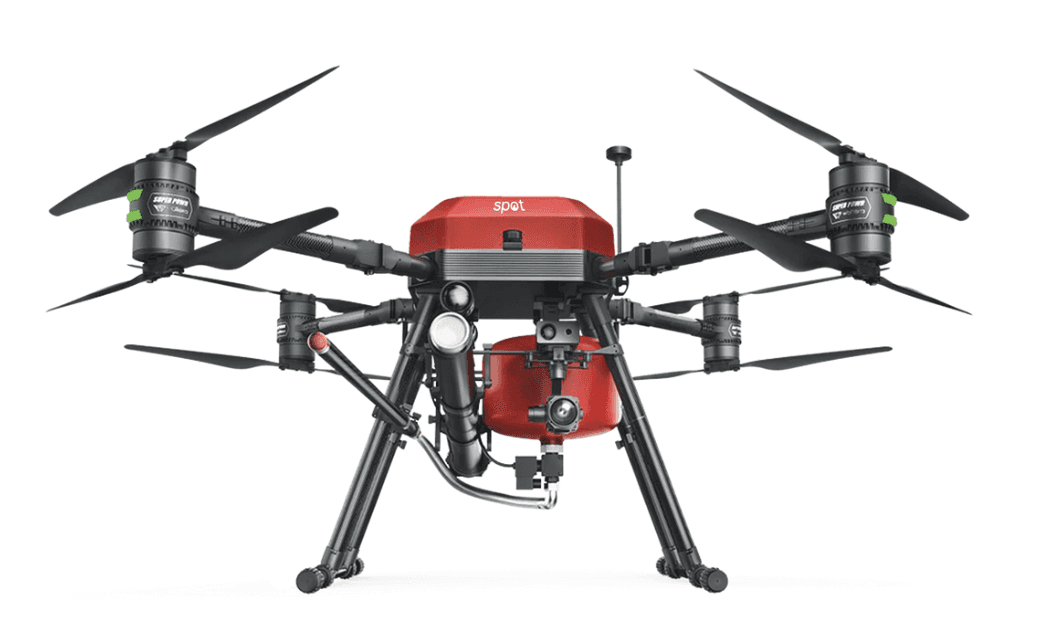
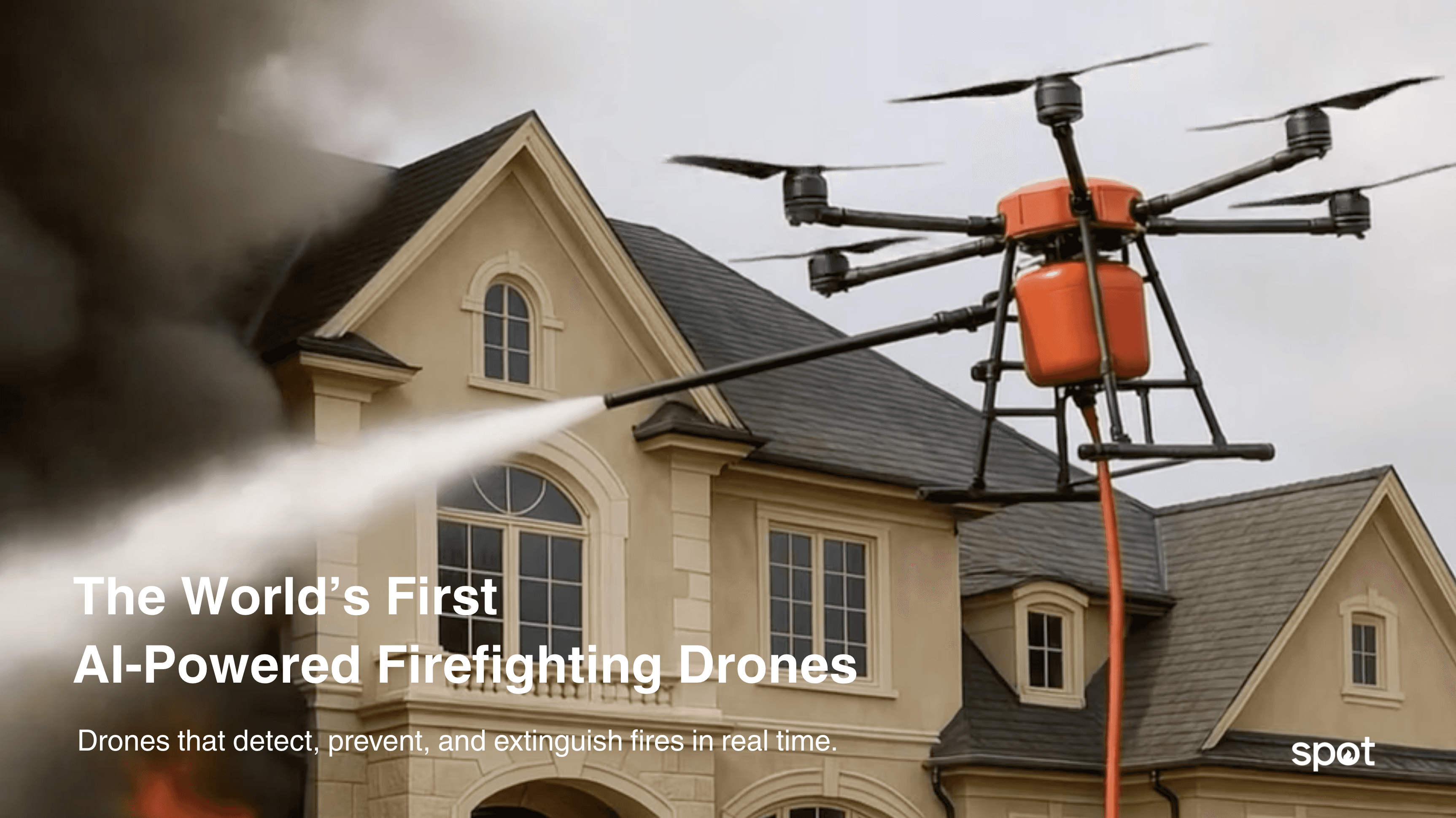
For our semester-long project at IYA, my team and I created SPOT- a wildfire safety drone system aimed at safeguarding high-risk communities from fires. SPOT utilizes advanced drone-sensor technology to monitor environments, detect potential fire hazards, and assist in mitigating wildfire threats.
MY ROLE (team of 5)
Product Development
UI/UX Design
SKILLS
Deployment Strategy
Ad Validation
Product Design
Web Design
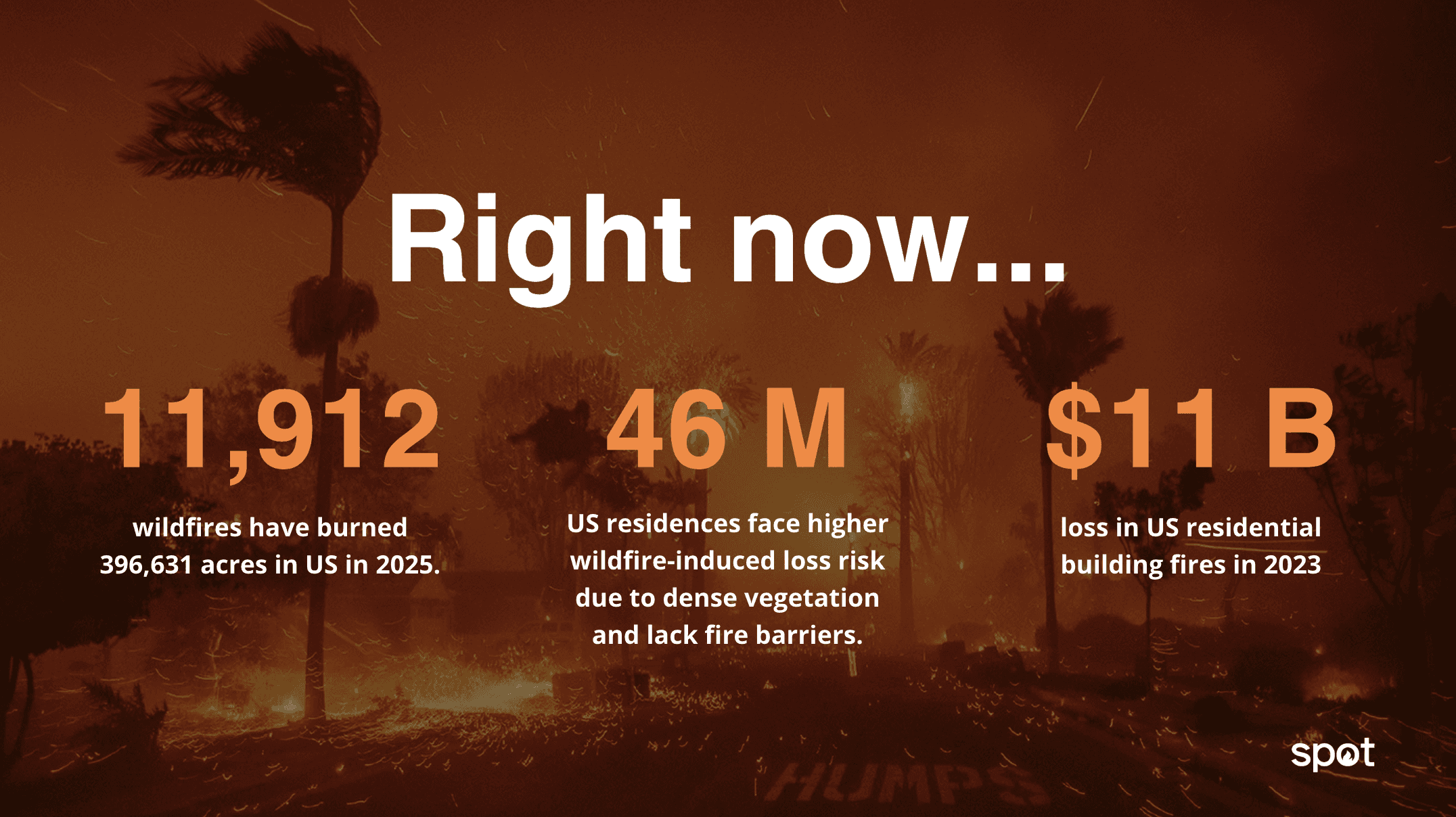
THE PROBLEM
SEE THE FULL PITCH DECK
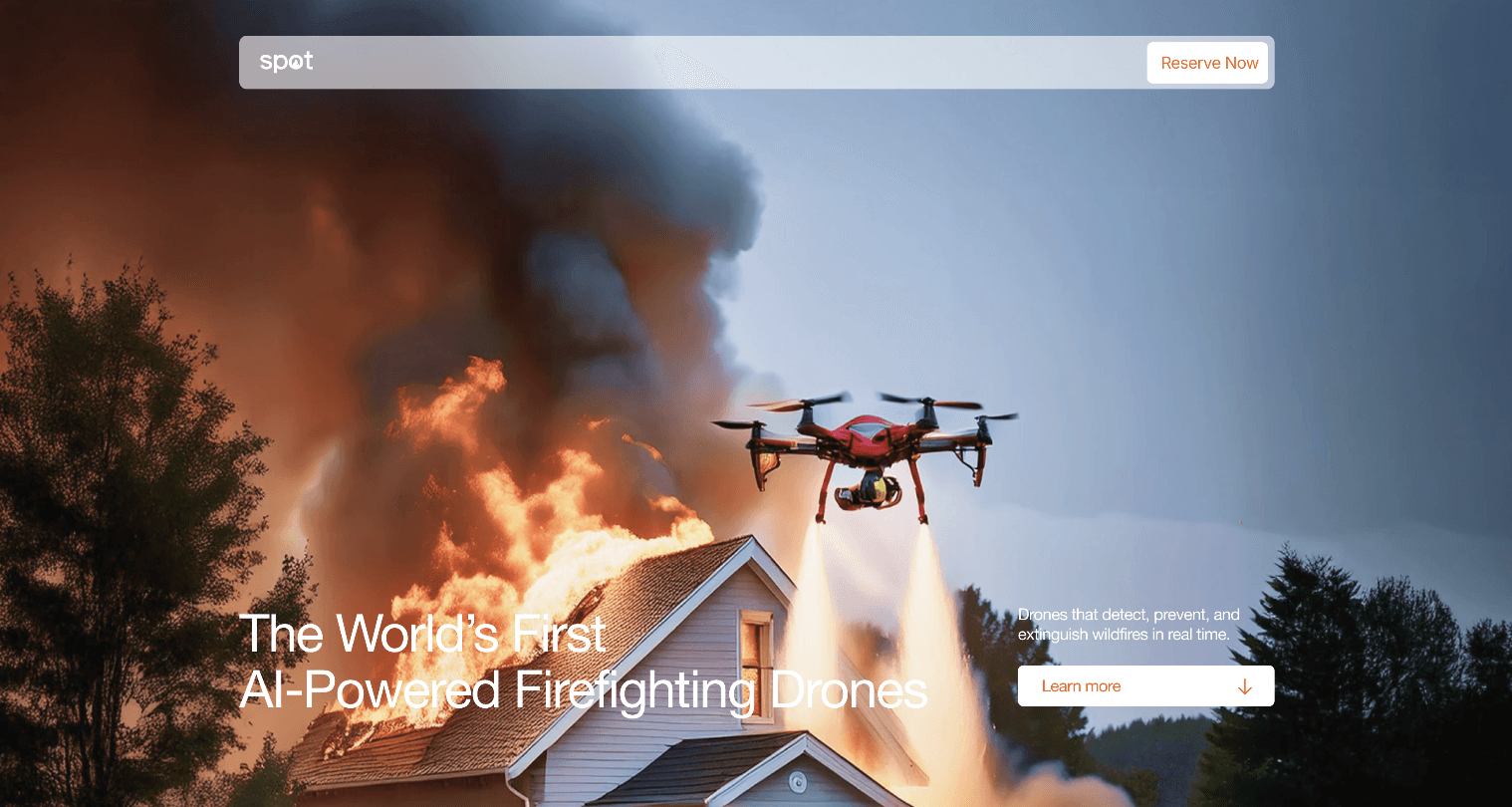
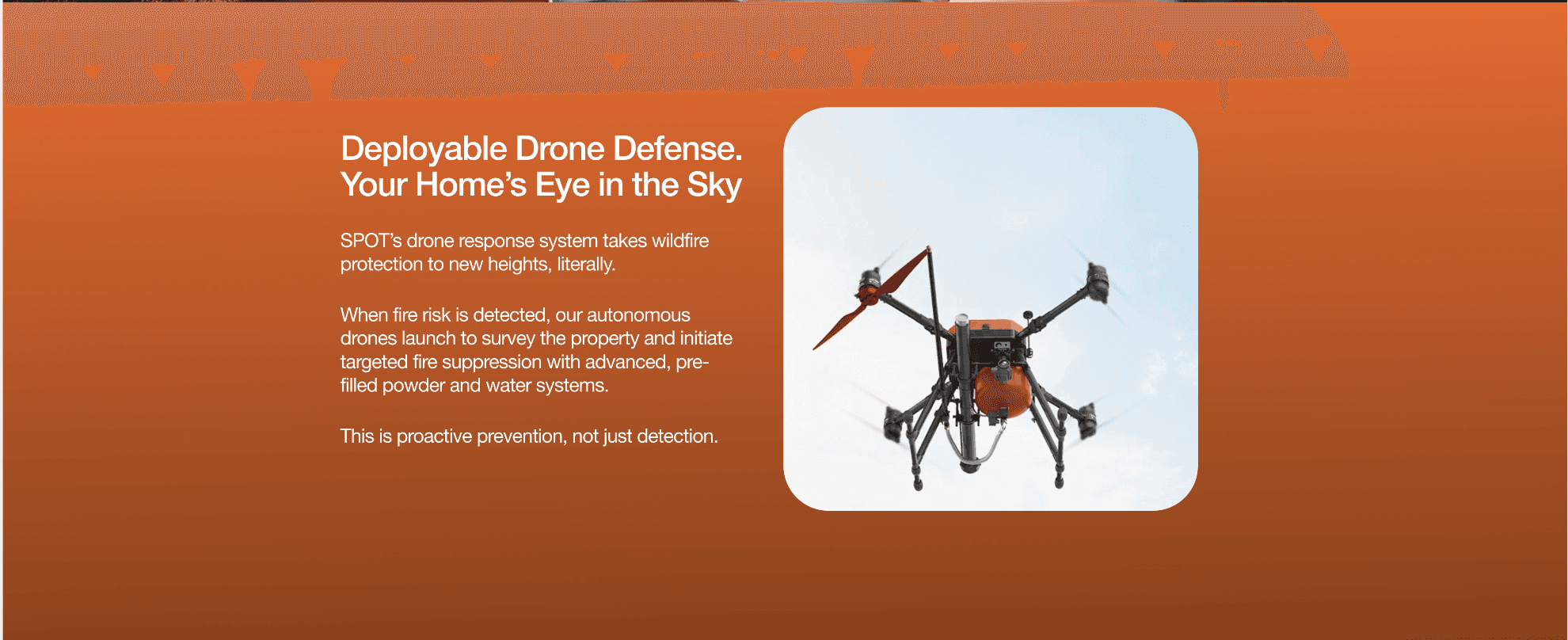
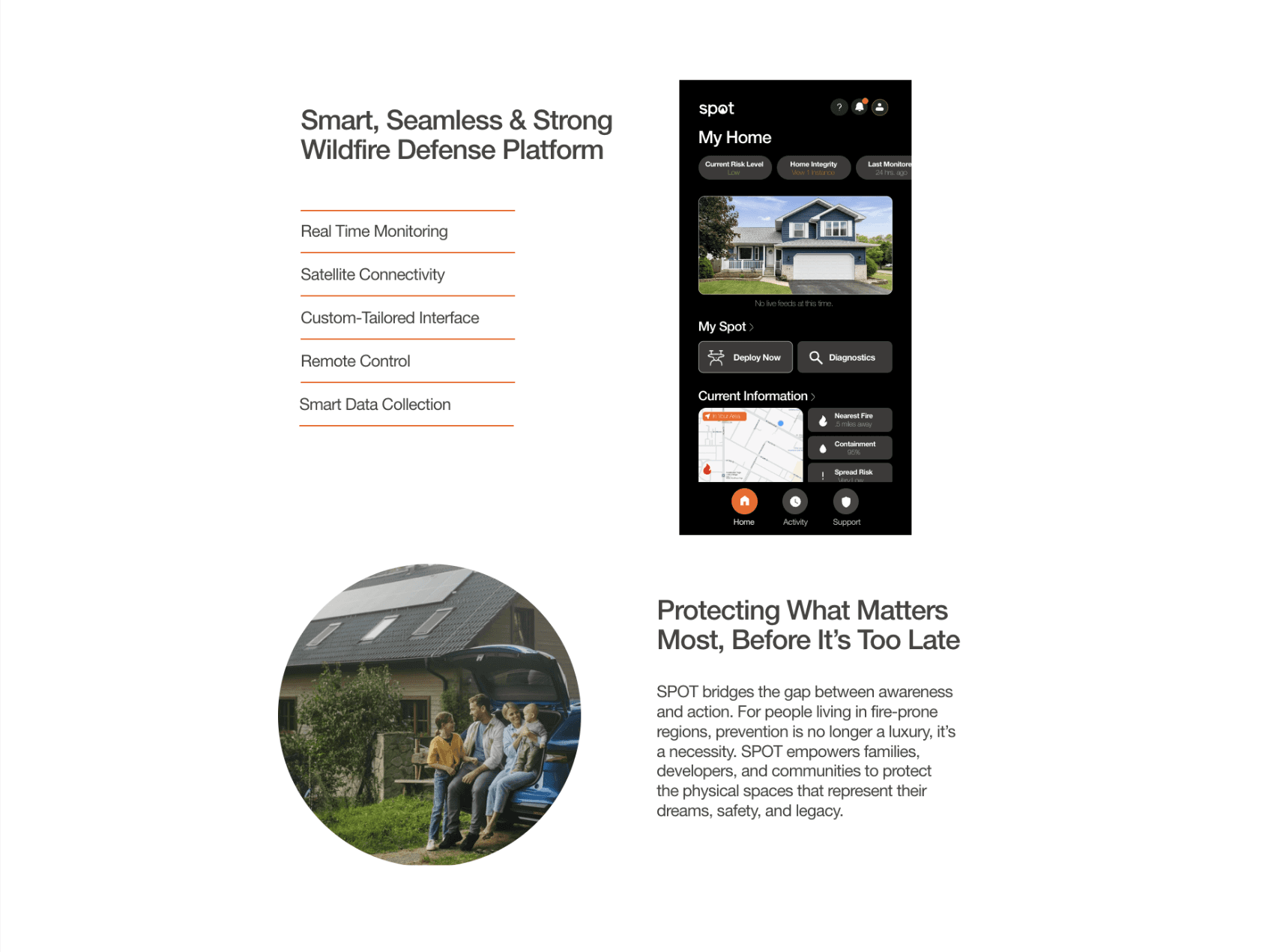
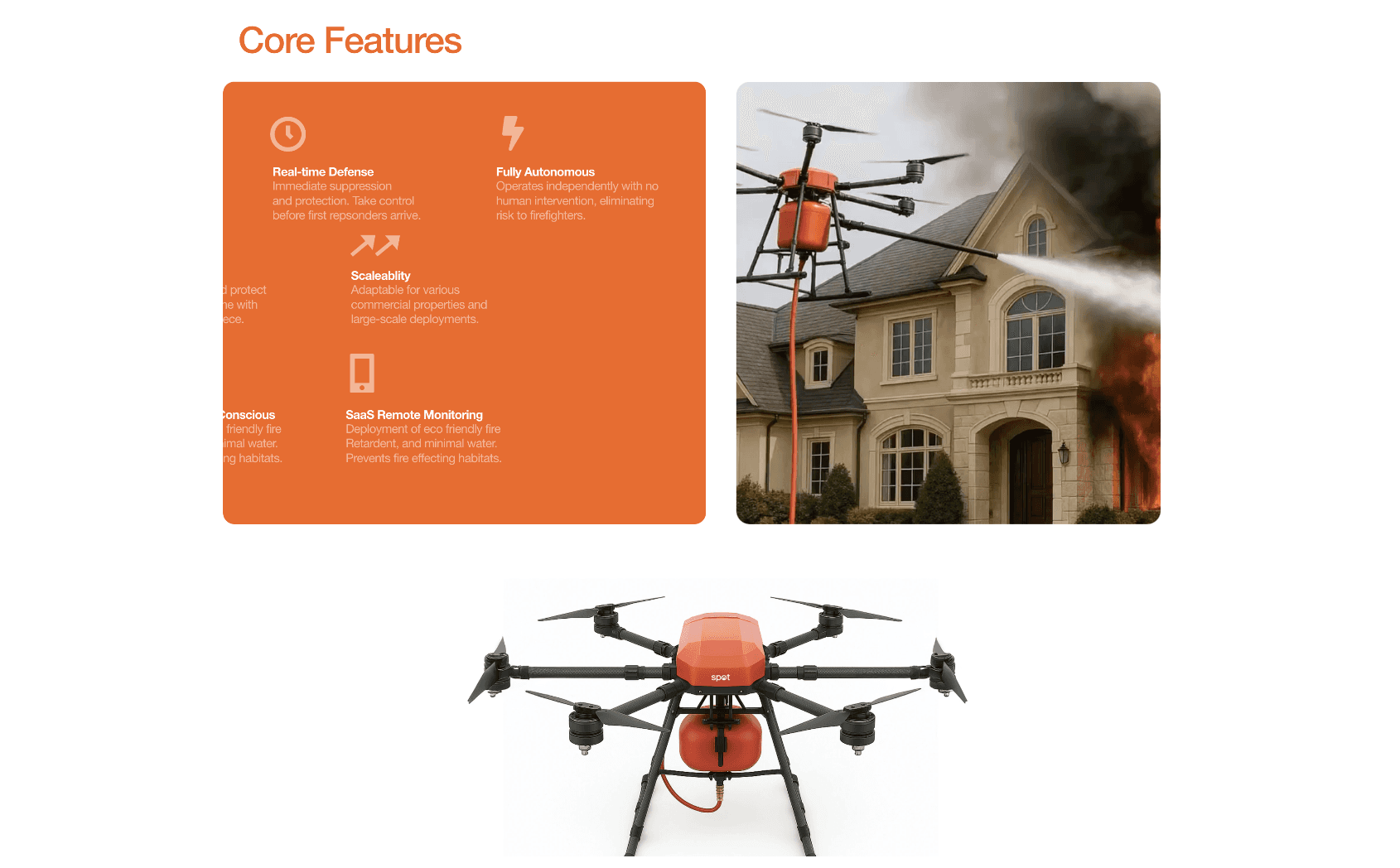
OUR LANDING PAGE / LEARN MORE ABOUT SPOT
To gain user validation, we used a Product Validation Funnel. By running low cost ads through Meta's Ads Manager, we assessed our impressions, CTR, reservations, CPR, and our projected eROAS to determine whether the project would be valuable to pursue.
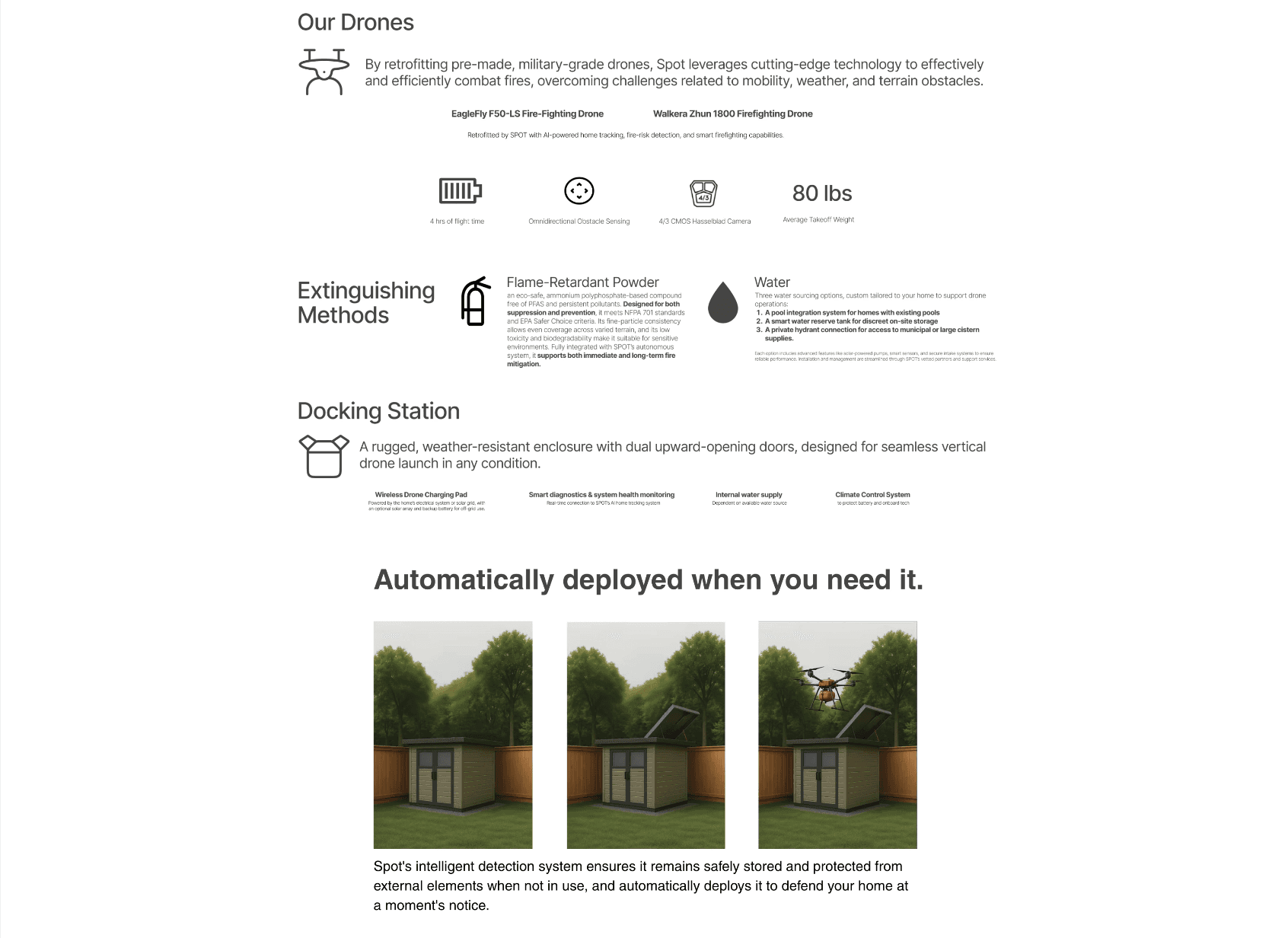
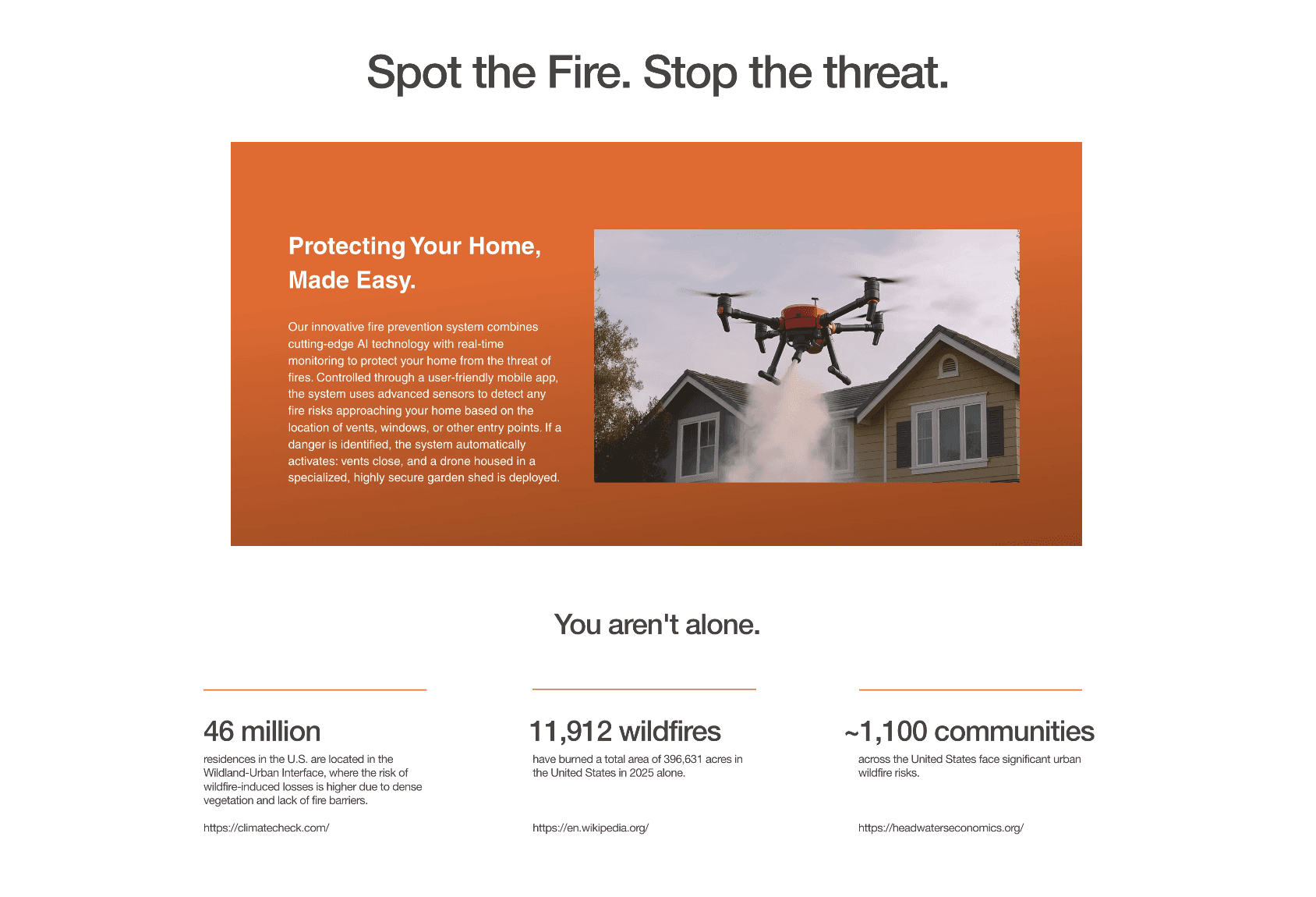
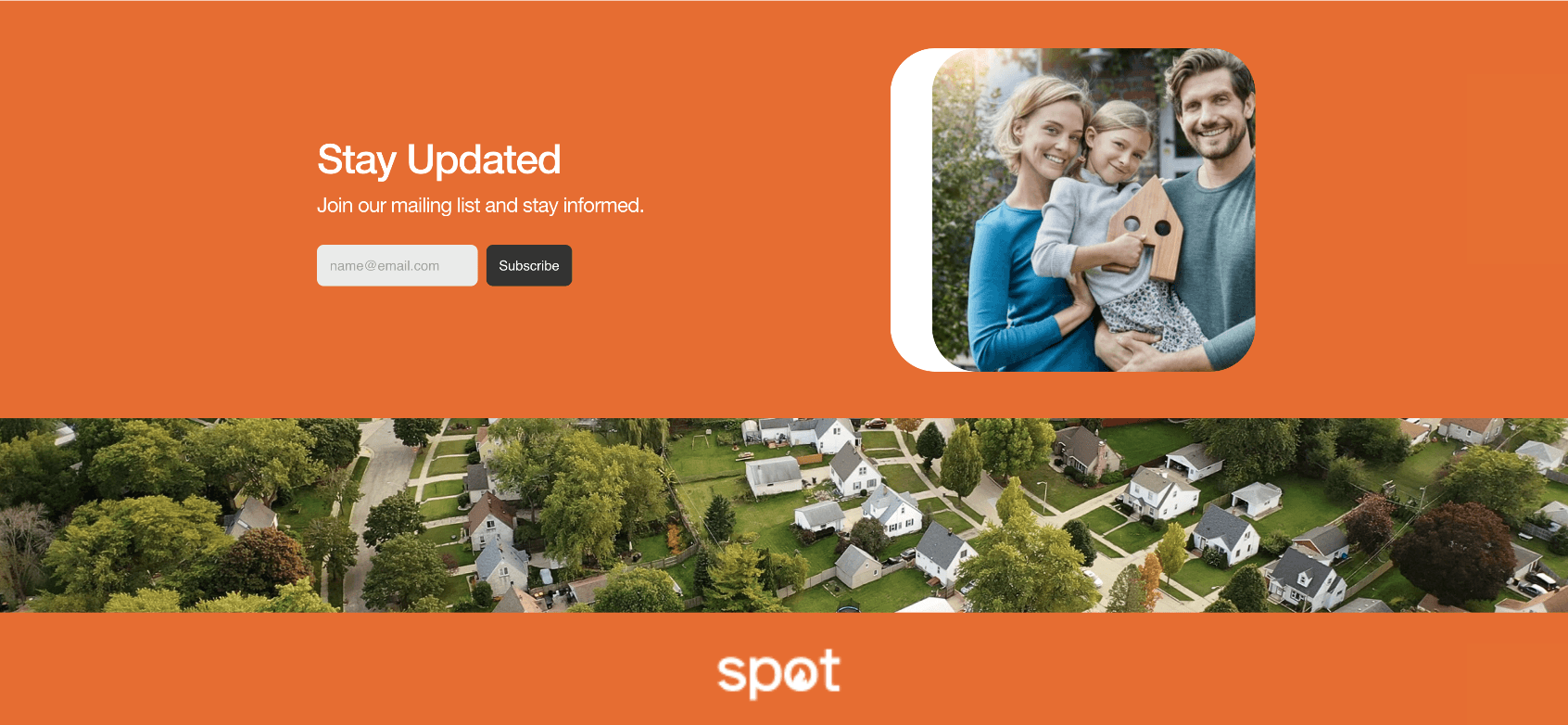
The landing page we created followed a specific framework meant to draw the potential customer in, ending with a call to action in order to see value.
KEY TAKEAWAYS
User validation is everything. You can get a lot of data on whether it's the right time for your product by using low cost methods such as ad validation. Test first. Iterate. Then build.
Leverage key timing drivers. Our product had support from our entire class and the problem space was clear. With the Palisades Fire being recent, our audience was aware of the importance of our cause.
Your team matters. Though we didn't have founder-market fit, we we're able to get as far as we did because each of our team members cared deeply about the problem we were trying to solve. Passion won't get you the whole way, but it'll get you pretty far.
REFLECTION & WHAT I'VE LEARNED
Have your heart in it, but keep a level mind.
Working on a project that hit so close to home was incredibly meaningful. Our brand, Spot, focused on fire prevention—an issue I care deeply about, especially after losing the Pacific Palisades, the community I grew up in. That personal connection made the work feel rewarding, but it also made the reality of the process more challenging. As we moved forward, it became increasingly clear that we weren’t the right team to fully execute the solution, and our ad validation ultimately confirmed that.
Still, the experience of building a product from the ground up—shaping the idea, designing it, refining it, and preparing it for investors—was invaluable. Just as important was recognizing when to step back. Having the clarity and honesty to say the concept wasn’t validated and that it was time to pivot took just as much strength as pushing forward. In the end, the project taught me not only how to build, but also how to let go when it’s necessary for the bigger picture.