Brij
DECEMBER 2025
A visual-first feedback tool that transforms messy, vague, and repetitive communication into actionable direction for designers and clear understanding for clients.
MY ROLE (team of 5)
Product Manager
Designer
SKILLS
Design Thinking
User Experience Research
Rapid Prototyping
THE PROBLEM
Communication is the #1 pain point.
When working with “non-creatives”, creatives report dealing with scattered feedback, vague expectations, and client misunderstandings which drive frustration, delays, and income loss.
🧑🎨
Creatives need to understand client needs and feedback quickly to revise effectively.
👨💼
Clients need to communicate their vision clearly and understand design choices.
EXISTING SOLUTIONS
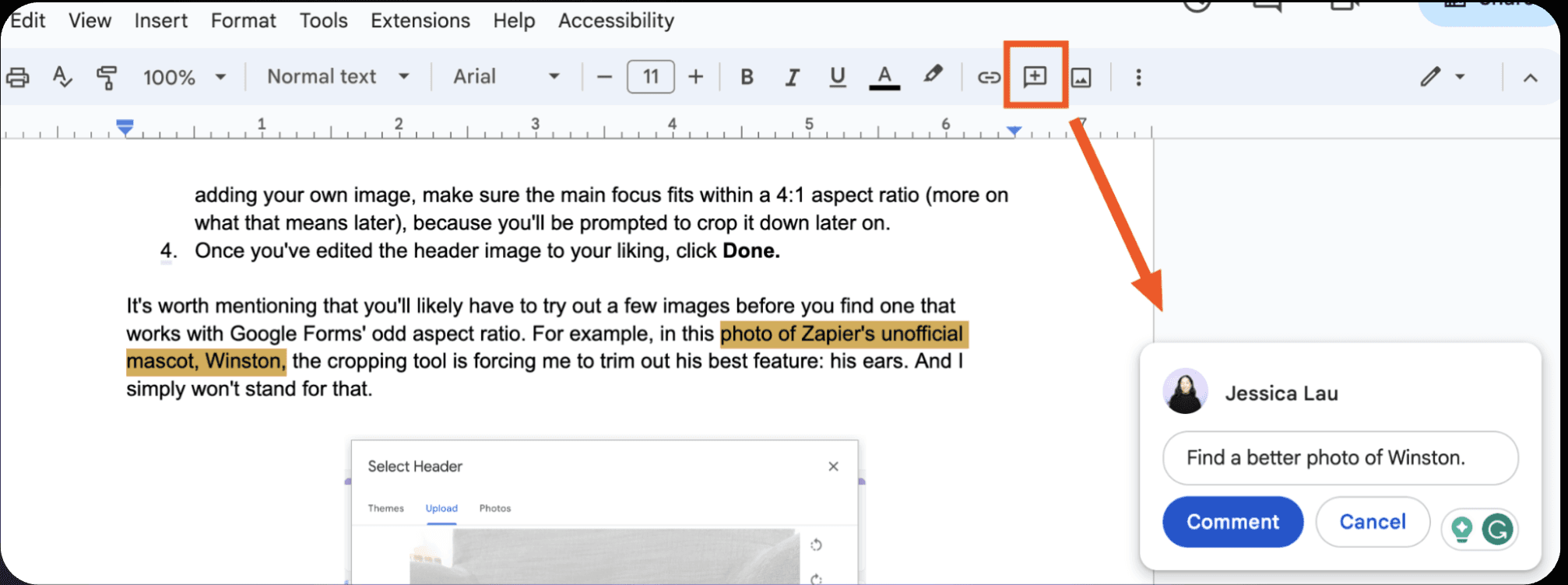
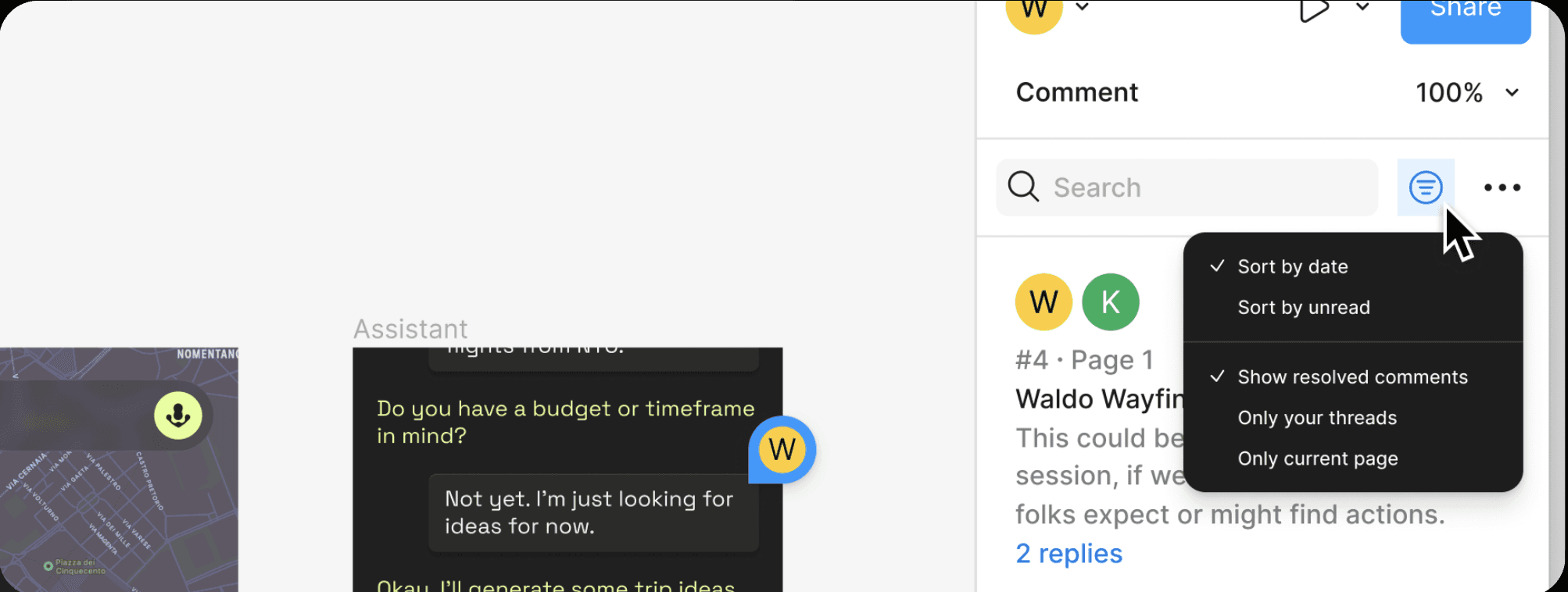
Feedback tools exist, but individual platforms keep them disconnected.
HOW MIGHT WE
How might we make asynchronous collaboration tools more effective in order to make communication easier between designers and non-designers?
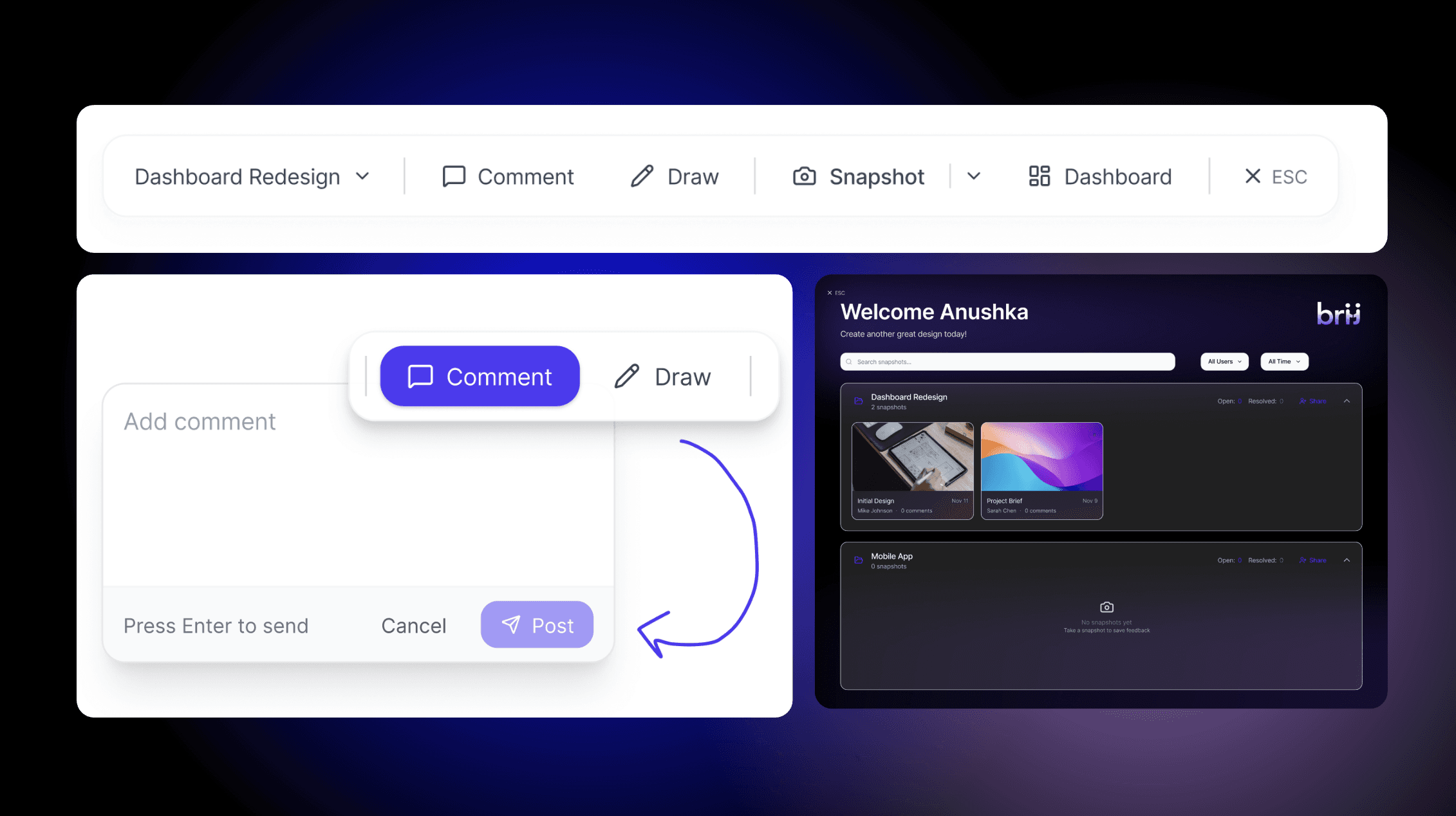
We knew that google docs comments were an effective asynchronous communication tool for writers, so we wanted to enable the same experience for visual designers. The core features are selection-box based commenting, compatibility with all websites and softwares, and an AI that asks follow up questions to get ahead of communication gaps.
Key Features
Easy visual commenting and documentation process to capture the entire process
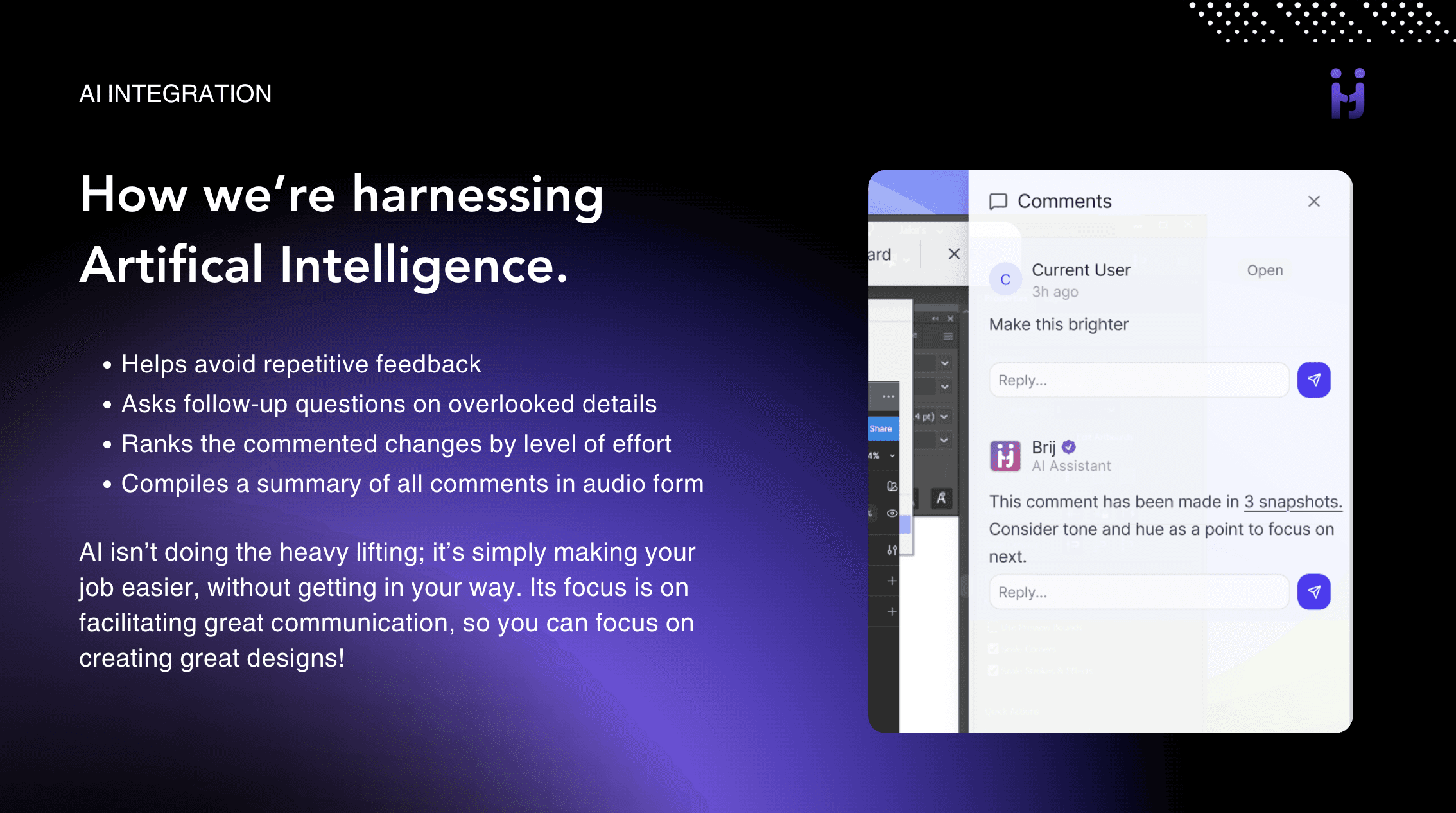
AI-Assisted clarity to focus on comments that matter most and summarize key needs
Non-intrusive design and compatibility for easy integration with workflow
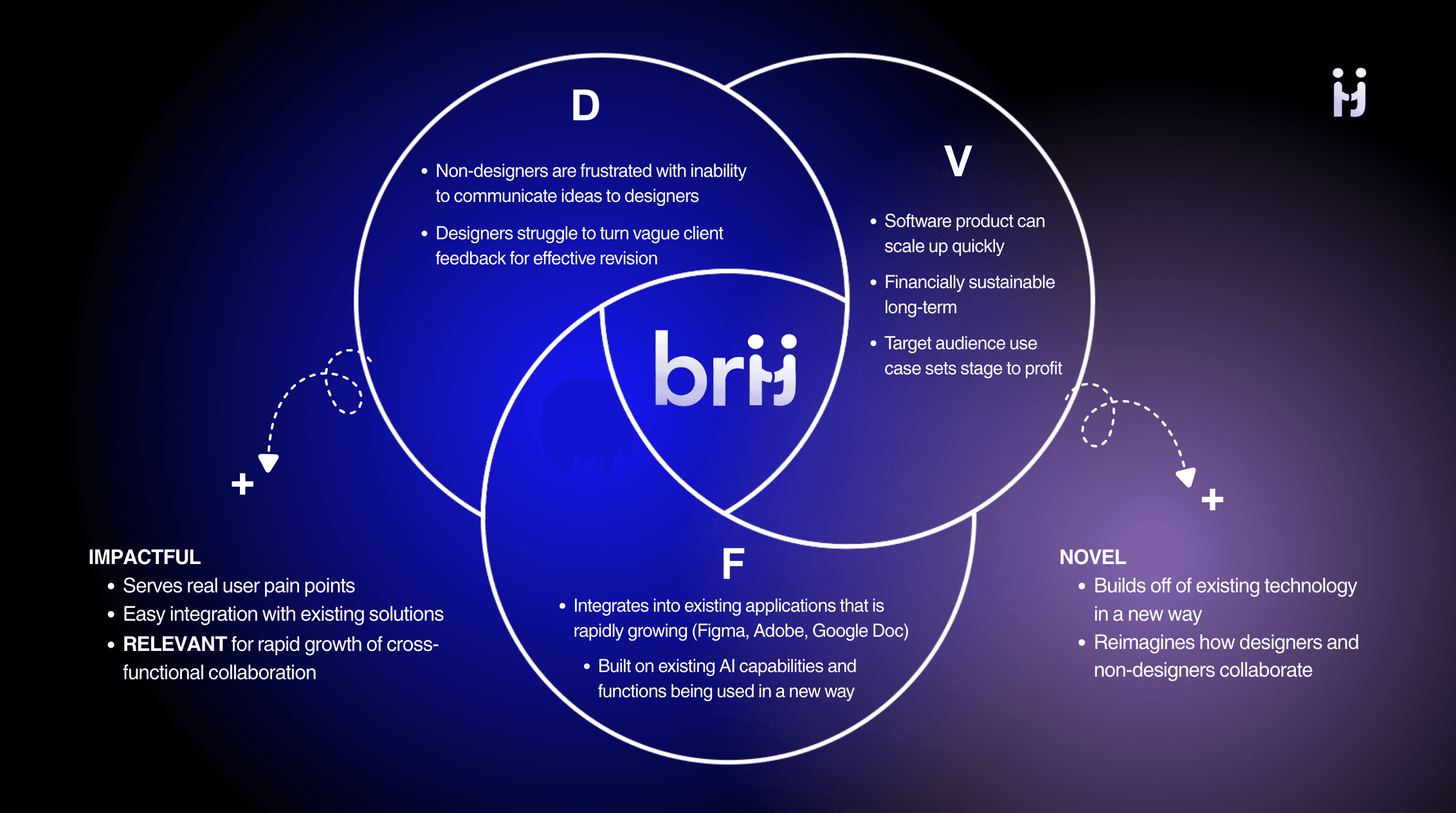
DESIRABILITY, VIABILITY, FEASIBILITY FRAMEWORK
LOW FIDELITY PRODUCT WALKTHROUGH
AI INTEGRATION
USER TESTING
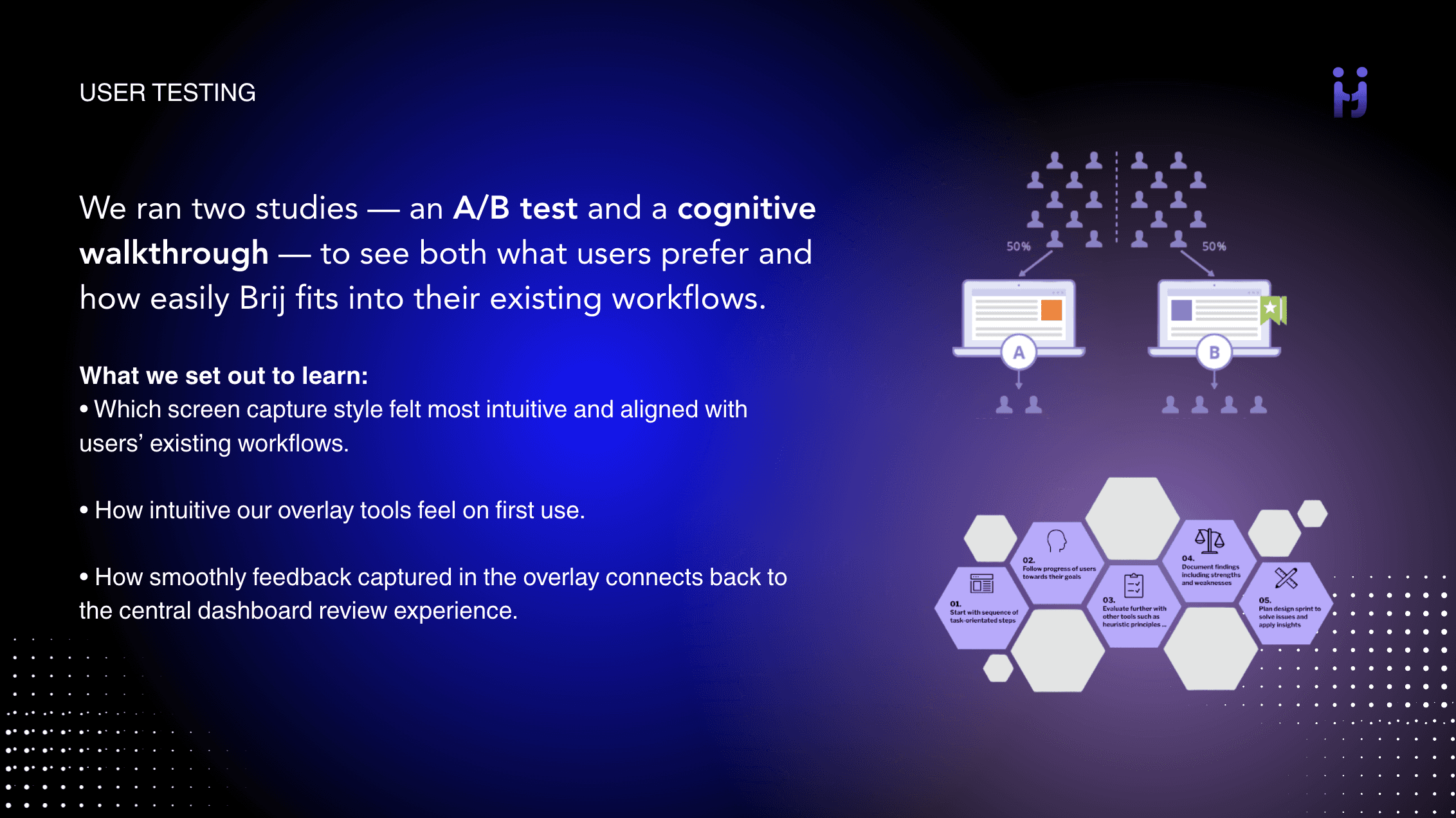
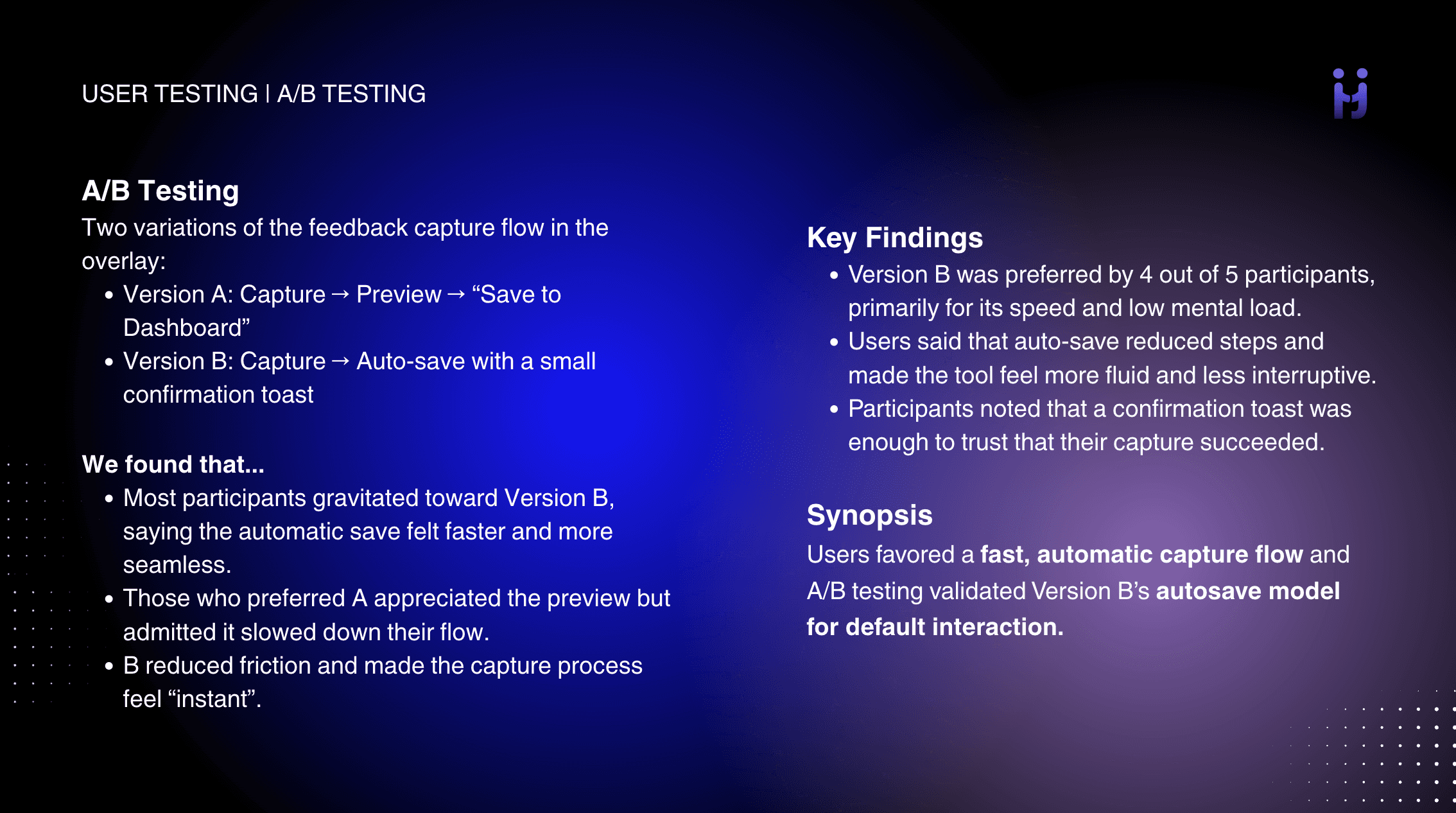
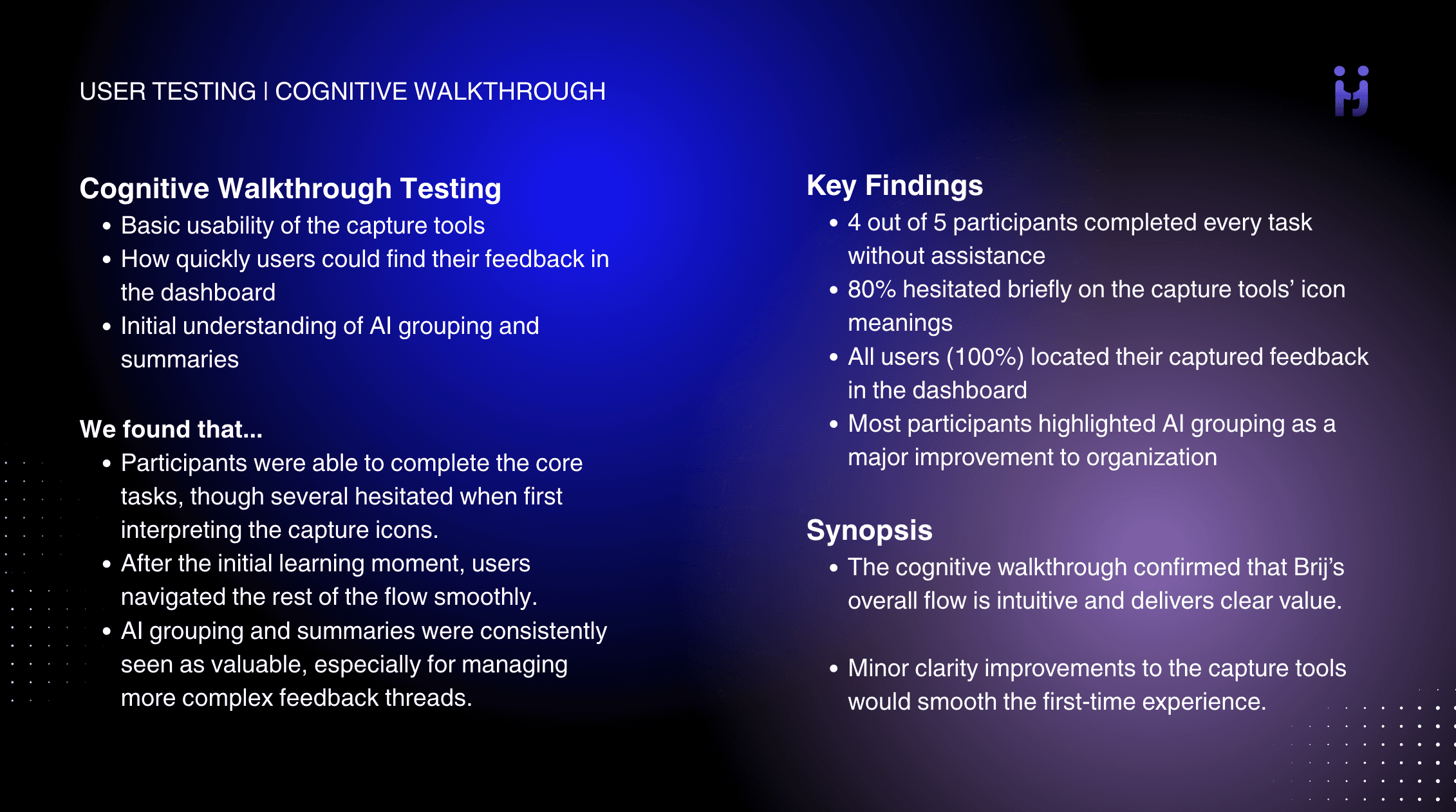
Brij must simplify design feedback by making comments visual, clear, and organized; users responded positively, confirming our mission to make designer–client communication seamless and efficient.
OUR REFINED VISION
Our mission is simple: bridge the communication gap between designers and clients so creativity can flow without friction.
REFLECTION & WHAT I'VE LEARNED
Communication is key.
Within my team of 5, I was very happy with both the final product and the design process. I focused primarily on research, UX, and UI design—framing the problem, translating insights into product features, and shaping the end-to-end user flow.
Coming from a creative background, university exposed me to new ways of communicating ideas beyond visual craft alone. This project reinforced how essential clear communication is in UX—not just in presenting solutions, but in aligning teams and questioning assumptions. It was especially motivating to work on a problem that had long been accepted as fact and begin to reframe it through research and design.
Moving forward, I see this project as a strong starting point. I want to bring users into the process earlier, better articulate the thinking behind my design decisions, and continue pushing myself to iterate and learn as a designer.